

| Welcome to the DTP Summer Briefing |
DTP are pleased to share our latest DTP Briefing which we prepare on a quarterly basis. The aim of our briefings is to provide useful updates on relevant social housing sector content, highlight where DTP can assist in providing support and advice on any issues arising from these and to publicise recent DTP social media activity, future events, and content. The briefing is shared with our clients, on our website and via our email footer. As always, we welcome feedback for future content – please email [email protected] with any thoughts or suggestions.
| Sector Updates |
| The 2nd July 2025 saw the launch of three Government consultations, all of which have significant impacts for the social rented sector: – How to implement Social Rent convergence – Improving the energy efficiency of socially rented homes – Consultation on a reformed Decent Homes Standard for social and privately rented homes How to implement Social Rent convergence Rent convergence was first introduced in 2002 with an aim of aligning social housing rents for similar Social Rent properties. The policy was later ended in 2015, although not all properties had reached what was known as the ‘target rent’ by this time (now referred to as formula rent). Following the Government’s consultation in late 2024 on future social housing policy where many providers highlighted the need for rent convergence to be re-introduced, the Government has sought the views from the sector how to re-introduce rent convergence. There’s still time to respond, if you haven’t already done so, the consultation ends on 27 August 2025 and can be found here. Under the proposals, RPs would be permitted to increase rents by an additional amount each year, over and above the usual CPI+1% limit, until they ‘converge’ with formula rent (n.b. this does not include any additional rent flexibility applied by RPs on top of formula rent). In preparing for the re-introduction of rent convergence, we are seeing many clients starting to consider the potential implications and impacts on their financial business plan as well as preparing to consult with tenants in order to inform decision making at Board level as rent convergence is likely to be optional. If you require any support in understanding the impacts of rent convergence or in planning for its introduction, please contact Director Sarah Jackson [email protected] Reform of the Decent Homes Standard (DHS) and Setting Minimum Energy Efficiency Standards (MEES) The consultation to the DHS aims to reflect current housing challenges and expectations within the social housing sector but also to apply the DHS to the private rented sector, thus addressing disparities in housing quality; something that has been debated for a while. Not only could the consultation result in a focus on condition rather than age of fixtures, mandatory floor coverings and child-resistant window restrictors, enhanced damp and mould standards could also be introduced. Most of these changes will likely require retrofitting and upgrades across a large portion of existing housing stock with the Ministry for Housing, Communities and Local Government citing additional compliance costs to meet the new higher standard estimated at £836 million (in 2019 prices) for the social rented sector and a staggering £2.4 billion in the private rented sector. Central to the review of the DHS, is the inclusion of efficient heating and insulation, and compliance with MEES, which as we have already mentioned, is also out to consultation. Specifically applicable to socially rented homes, Registered Providers (RPs) will need to meet new metrics based on reformed Energy Performance Certificates (EPCs), including fabric performance (e.g., insulation), heating system efficiency and smart readiness. MEES will be embedded within the revised DHS under Criterion D (Thermal Comfort) which is proposed to include efficient heating systems, effective insulation and programmable heating controls. The DHS reforms are proposed to come into force by 2035 or 2037, but MEES would be enforced earlier – by 2030. This staggered timeline may create operational pressure for providers to manage overlapping compliance deadlines and financial impacts. Both consultations close on 10 September 2025 and if not already started, we urge clients to start considering the future impact of these proposed changes – which may require reassessment of long-term investment plans for repairs and maintenance and stock investment. For further support in this area, please contact Senior Consultant Diane Carney [email protected] Social Tenants Access to Information Requirements (STAIRs) The Government intends to direct the RSH to add the Social Tenants Access to Information Requirements (STAIRs) to the Regulatory Standards. The aim of STAIRs is to give tenants of Private Registered Providers (PRP) the same information access rights as the Freedom of Information Act provides for Local Authority Registered Provider tenants. STAIRs will require PRPs to publish information about their management of social housing from October 2026 and to provide certain information to tenants on request from April 2027. The Government has not yet outlined details of STAIRs, but proposals consulted upon by the previous Government suggested that mandatory publication requirements would include information relevant to plans and activities related to the management of social housing, for example information about rent collection, rent and service charge setting, services provided, performance, complaints, resources, data handling and stock profile. The introduction of STAIRs may seem some way off, and it may be tempting to think that preparation can wait until more details are known. We suggest however that, if not recently undertaken, it is prudent to undertake a review of your website, ideally involving residents, to consider the quality, relevance and accessibility of information and to consider resources and arrangements for responding to requests for information. If you require any support in preparing for the introduction of STAIRs, please contact Senior Consultant Mags Pearson [email protected] Failure to Prevent Fraud Failure to Prevent Fraud is a new corporate criminal office that comes into effect in October 2025 as part of the Economic Crime and Corporate Transparency Act (2023). Organisations that are in scope* may be liable if an employee or associated person commits or tries to commit a fraud with intent to benefit the organisation, and the organisation does not have reasonable fraud prevention measures in place. We know that many RPs will already have good fraud prevention measures in place, however the Government has also published some helpful guidance on what these measures might look like.DTP can provide support to organisations in reviewing their fraud prevention measures; we would always suggest starting with a refresh of the fraud risk assessment and a review of governance documents to check that proportionate measures are in place, that there is a healthy culture of fraud awareness and that there is clarity on the organisation’s approach to fraud prevention. For those thinking about mergers or new strategic partnerships, fraud prevention is also a key part of due diligence. If you would like to know more about Failure to Prevent Fraud or how DTP can assist your organisation in reviewing your current approach, please contact Senior Consultant Mags Pearson [email protected]. We also have a link to our recent podcast on the subject below. *The legislation applies to incorporated organisations that meet two of the following: 250 employees or more, turnover of £36 million or more or £18 million or more in total assets. Memorandum of Understanding Between the Regulator of Social Housing and the Building Safety Regulator On 22 July 2025, the RSH and the Health and Safety Executive — acting as the Building Safety Regulator (BSR), released a new Memorandum of Understanding (MoU) setting out how they will work together to enhance building safety within the social housing sector. In basic terms, the MoU is a formal agreement that records the shared intention for the RSH and BSR to work together towards particular objectives. Although not legally binding, it reflects a genuine commitment to cooperate. Under the Building Safety Act 2022, both regulators are legally required to collaborate and exchange information as part of their respective roles. The RSH oversees RPs while the BSR regulates Accountable Persons (APs) and Principal Accountable Persons (PAPs). In many cases, the RP and the AP/PAP are the same organisation, meaning both regulators have an overlapping interest in how building safety risks are identified and managed. Where a RP is also the Accountable Person/Principal Accountable Person for a building, both the RSH and the BSR will be actively involved in monitoring building safety. This MoU signals a stronger flow of information and closer communication between the two regulators. To find out more please contact Senior Consultant Marcus Evans [email protected] RSH Competence and Conduct Standard – Latest Developments The Competence and Conduct Standard is one of several reforms introduced following the Grenfell Tower tragedy and the recommendations from the Social Housing White Paper 2020. Its aim is to ensure residents are treated with dignity and respect, their voices are heard, and that they receive a consistently high standard of professional service. It has now been confirmed that the new standard will take effect in October 2026. Larger RPs (those with more than 1,000 homes) will have three years to fully comply, while smaller providers (under 1,000 homes) will have four years. This announcement follows a consultation in early 2024, which explored how best to implement these changes. The new rules set out an outcome-focused framework for competence and conduct across the social housing workforce in England, establishing clear expectations for qualifications, behaviours, and organisational culture. More guidance will be issued in the months ahead, and updates will be shared as these details emerge to help organisations prepare. While October 2026 might seem a long way off, early preparation will help build a genuine culture of professionalism rather than simply aiming for minimal compliance. DTP has been advising clients on how to prepare, for more information or support please contact Senior Consultant Marcus Evans [email protected] |
| DTP Services |
| DTP has a values based approach to our work, providing expert advice in a people focussed way, which delivers tailored solutions to our clients. Over the last 12 months we have been further developing the range of services that we offer, all aimed at helping our clients improve how they are governed, operated and financed. Full details can be found on our website here. One area we specialise in is supporting larger RPs with their preparations for RSH Inspection. In addition to a range of flexible inspection support, DTP offers a mock inspection service. Our “mock inspection” approach provides objective, critical review using the same methodology as that employed by the Regulator of Social Housing (RSH). A number of recent clients have chosen this option in order to provide a robust, independent assessment of the organisation’s readiness for the RSH evaluation. The outcome of our mock inspection approach is a short written report setting out our findings. We do not provide an indicative ‘C’ grading however we validate areas of good practice and identify and prioritise areas for further work and improvement. We have a number of case studies on our website, and if you would like to talk about this, or any of our other inspection services, please contact Director Angela Lomax at [email protected] If you would like to explore services which you have not utilised before, please do not hesitate to contact a member of the DTP team to discuss your requirements. |
| Liverpool Housing Summit (8-9 September) |
| We are delighted to be hosting a Housing Management session at this year’s Housing Summit in Liverpool on the 9th September. We will be in the “Housing in Practice” area so please do come and join us if you would like to hear from some great speakers who will be sharing their experiences and learning from the consumer element of recent RSH inspections. Several DTP colleagues will also be at the event over the two days so if you see us, please say hello, or drop us a line in advance to arrange a meet up. |
| DTP Team |
| DTP is growing and is in the process of appointing two new Senior Consultants to the finance, treasury, business planning and rents team. Announcements of the appointments will be made in week commencing 1 September with both new team members being in post by 8 September 2025. We will be introducing the new members to clients in due course. Visit our website to learn more about our team members and how they can support you here |
| DTP Podcasts, Webinars and DTP Views |
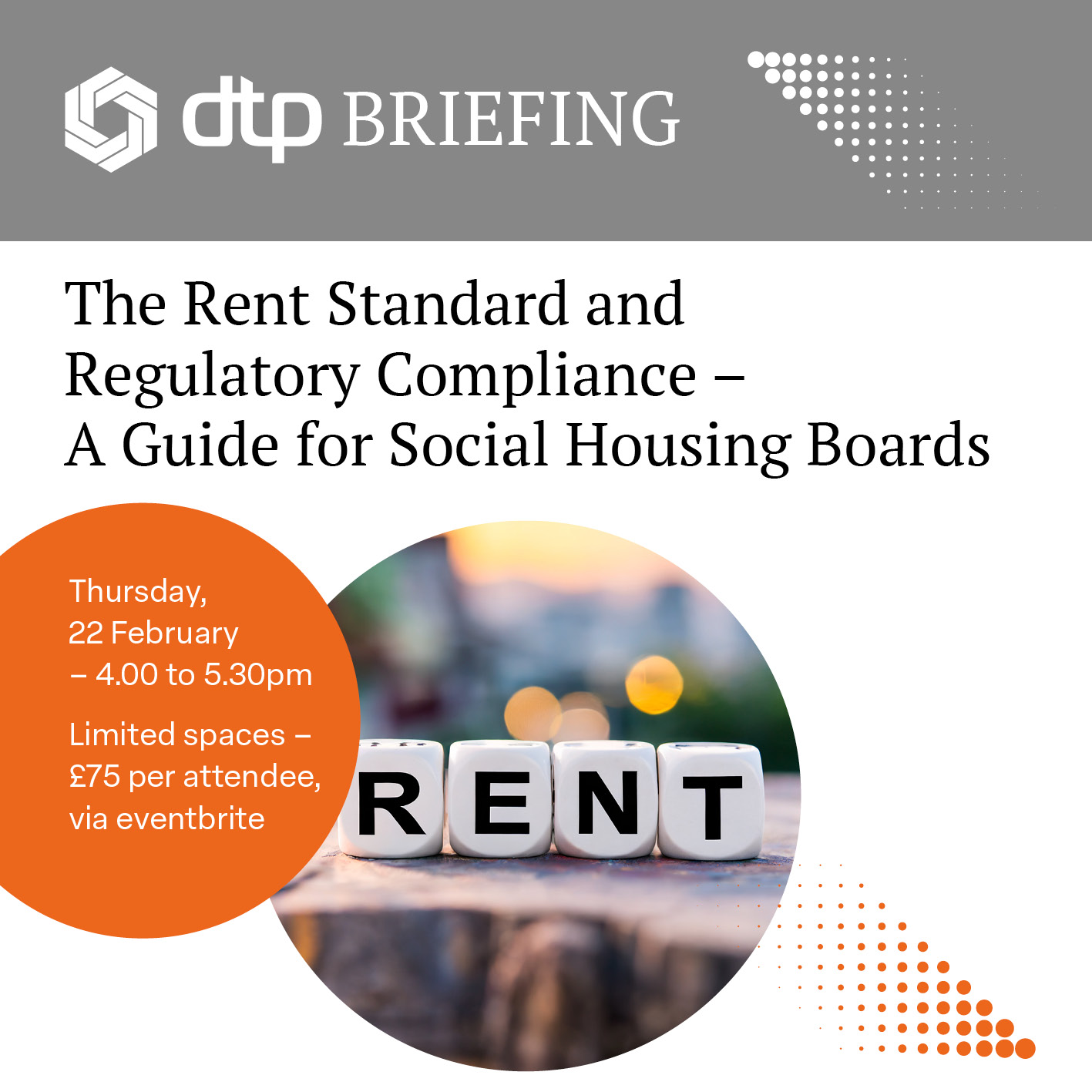
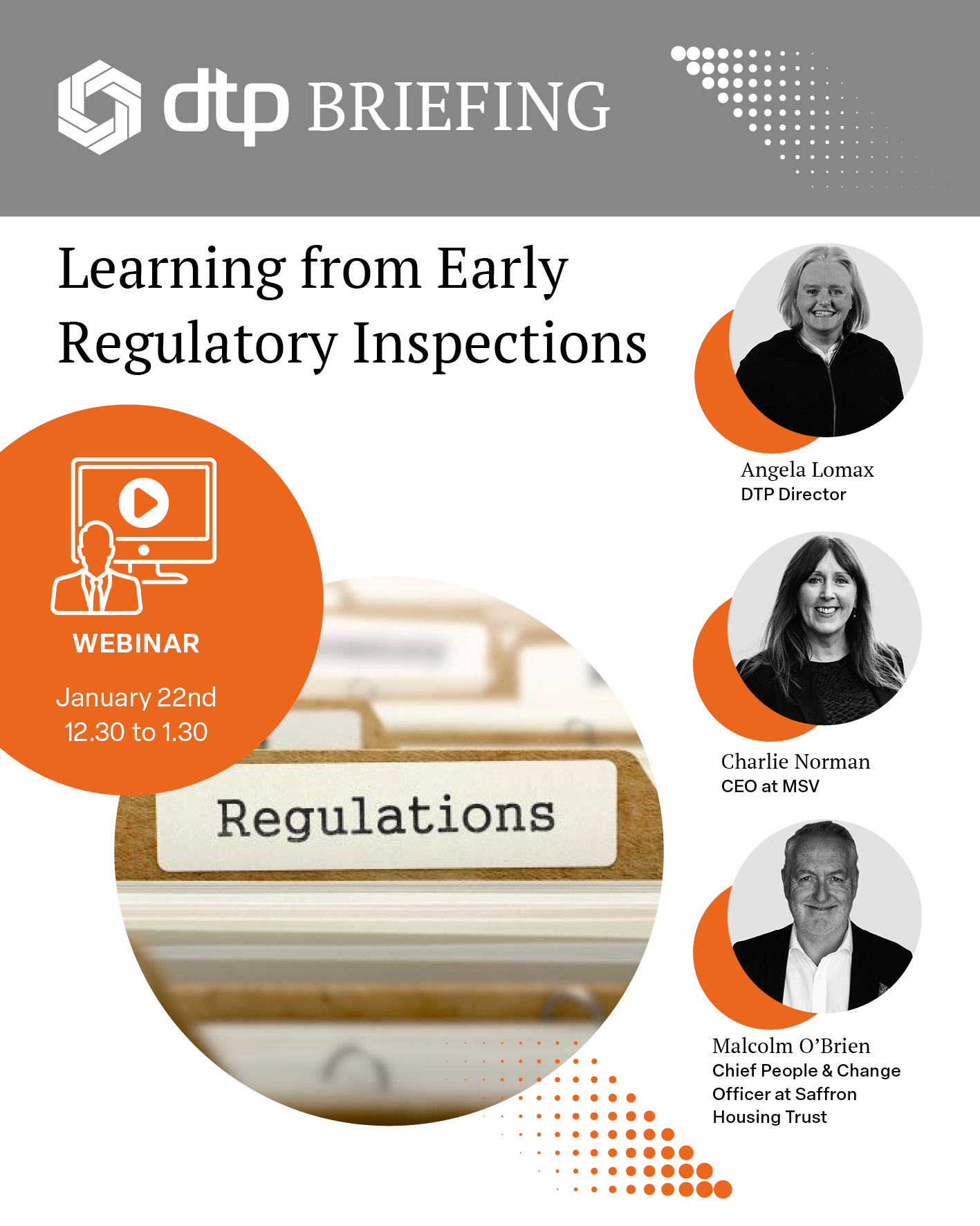
| Here is a reminder of some of our most recent webinars, podcasts and DTP Views (with links provided) all aimed at providing valuable insight and sharing good practice. We share these via our social media and on our website. DTP Podcast – Navigating the Failure to Prevent Fraud Regulation DTP Briefing (Webinar): The Rent Standard and Regulatory Compliance DTP Briefing (Webinar): Learning from Early Regulatory Inspections DTP Podcast – Meet the Client – Salix Homes: Learning from the Regulator of Social Housing Inspection DTP Podcast – Understanding Assets and Liabilities Registers All of our podcasts are available on our YouTube channel here DTP – YouTube DTP Views – Rethinking Risk: Five Essentials for Boards to Consider on Away Days DTP Views – Understanding Assets and Liabilities Registers (Marcus Evans) DTP Views – Housing Association Boards: Why External Financial Assurance Matters (Andy Roskell) DTP Views – Financial Benchmarking for Development in Social Housing: A Pathway to Success (Andy Chapman) To keep up to date with all of our publications and general activity, you can follow us on LinkedIn by using this link DTP LinkedIn |
| DTP Case Studies |
| All of our past case studies are on our website and shared via our social media channels as they are released. In case you missed our most recent case studies, we have provided links to these below: Barnsley Council and Berneslai Homes – RSH Inspection Support Barnsbury Housing Association – Risk And Assurance Mapping Support Together Housing Group – Independent Case Review Wirral Methodist Housing Association – Governance Review Ongo Homes – Mock Inspection We hope that you’ve enjoyed our most recent briefing. Don’t forget, feedback as always is greatly appreciated – please contact [email protected] if you have any feedback that you would like to share. |